Platform Plays
The six recurring strategic plays that transform a pipeline value chain into a platform one
The problem this canvas solves
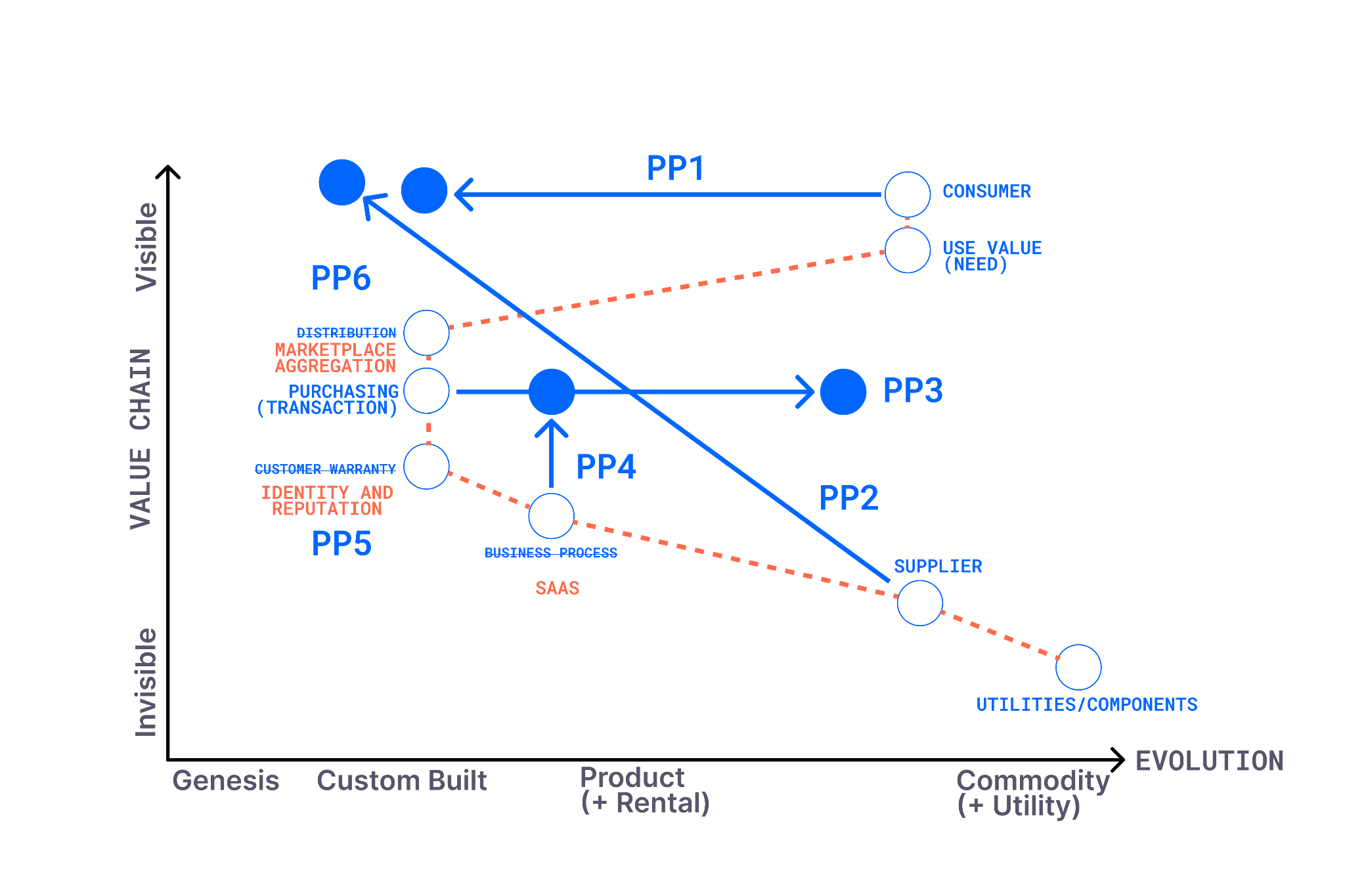
Pipeline-to-platform transformations are not improvised - they follow recurring moves. The six Platform Plays (PP1-PP6) are the recurring strategic plays that characterize a pipeline-to-platform transformation, unleashing the unexpressed potential emerging from an ecosystem. In Wardley Map terms they bring the C-shaped industrial value chain into the Z-shaped aggregator one - six "movements" that look very natural when executed visually on the map. Each play comes with the guiding questions to test whether it applies to the value chain at hand.
When to use it
Cross-reference the as-is value chain (from the Wardley Map) with the six plays to identify the gameplay: apply together those that are most relevant and have the greatest impact on the current ecosystem. The plays are a library, not a checklist. Their combined application typically leaves the aggregator controlling the elements that make the strategy defensible: the marketplace, the transaction handling, the SaaS, and participants' identity + reputation.
Canvas structure
From C-shape to Z-shape
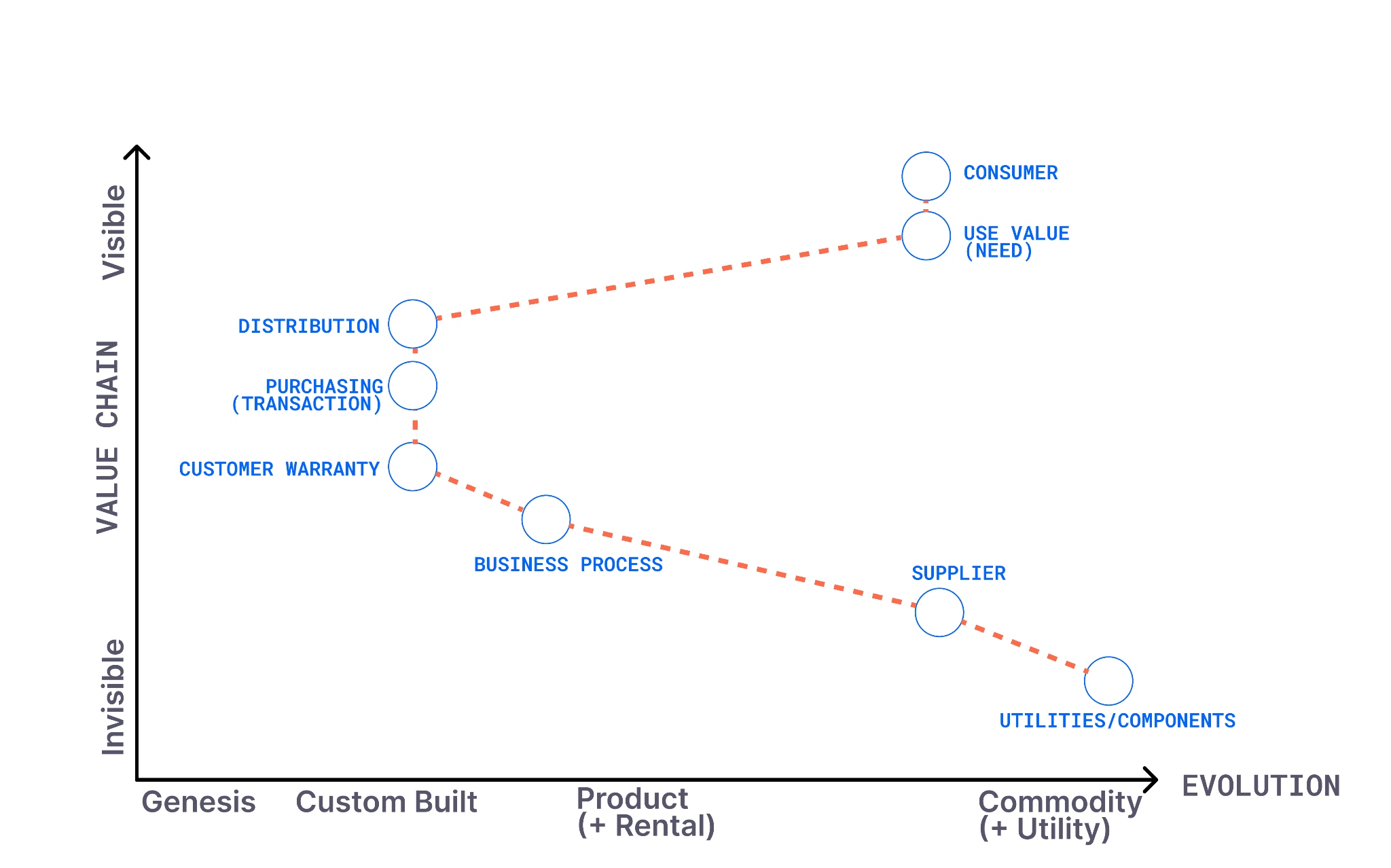
If one maps an industrial/pipeline value chain, one gets a C-shaped value chain. Normally, industrial firms provide solutions (as products, services or utilities) to massified and replicable customer needs (on the right of the evolutionary line, not by chance, as it needs to be a universal problem). They often do that by leveraging proprietary distribution channels - imagine a retail network - sometimes they use more commoditized channels, out of the firm's control, e.g. large-scale retail chains, or telco carriers for digital services. Sometimes these firms manage the purchasing transactions directly - such as with proprietary e-commerce sites - other times distributors do that, depending on the type and evolution of goods or services sold.
The six plays transform this industrial value chain into an aggregated (as in aggregators) value chain: the C-shaped chain becomes a Z-shaped one.
PP1 - Bring back personalization of experience for users
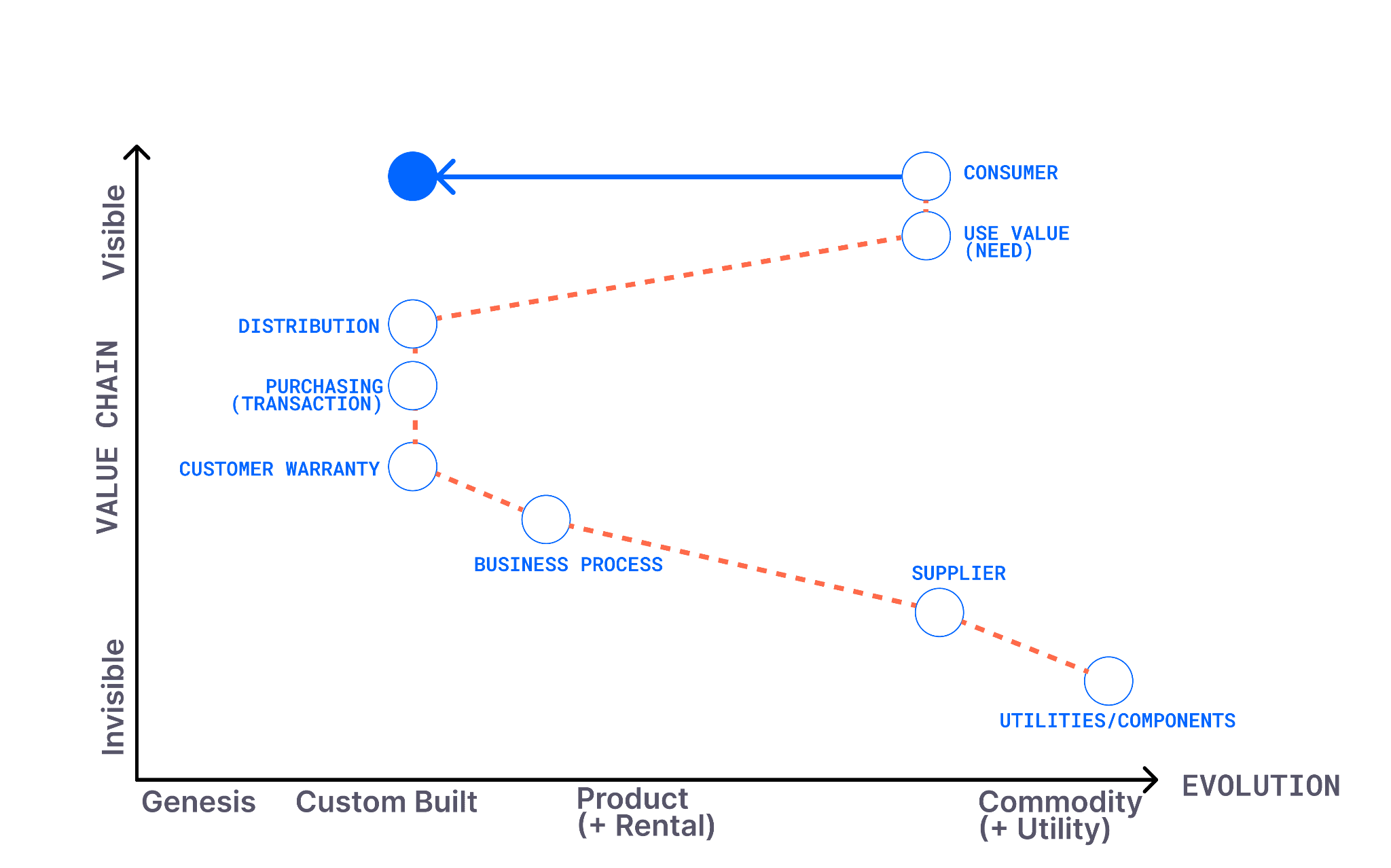
If users are being served by commoditized experiences, platforms ensure to provide "customized" experiences. This implies either connecting them with producers (see PP2) on top of a standardized transaction system (see PP3) or fully controlling and automating a mass-customization process that, in many cases, may lack the capability to understand the context fully.
Guiding questions: Are users in this value chain looking for stronger personalization? If not, what would it mean to serve them like that?
PP2 - Bring producers on top of the value chain
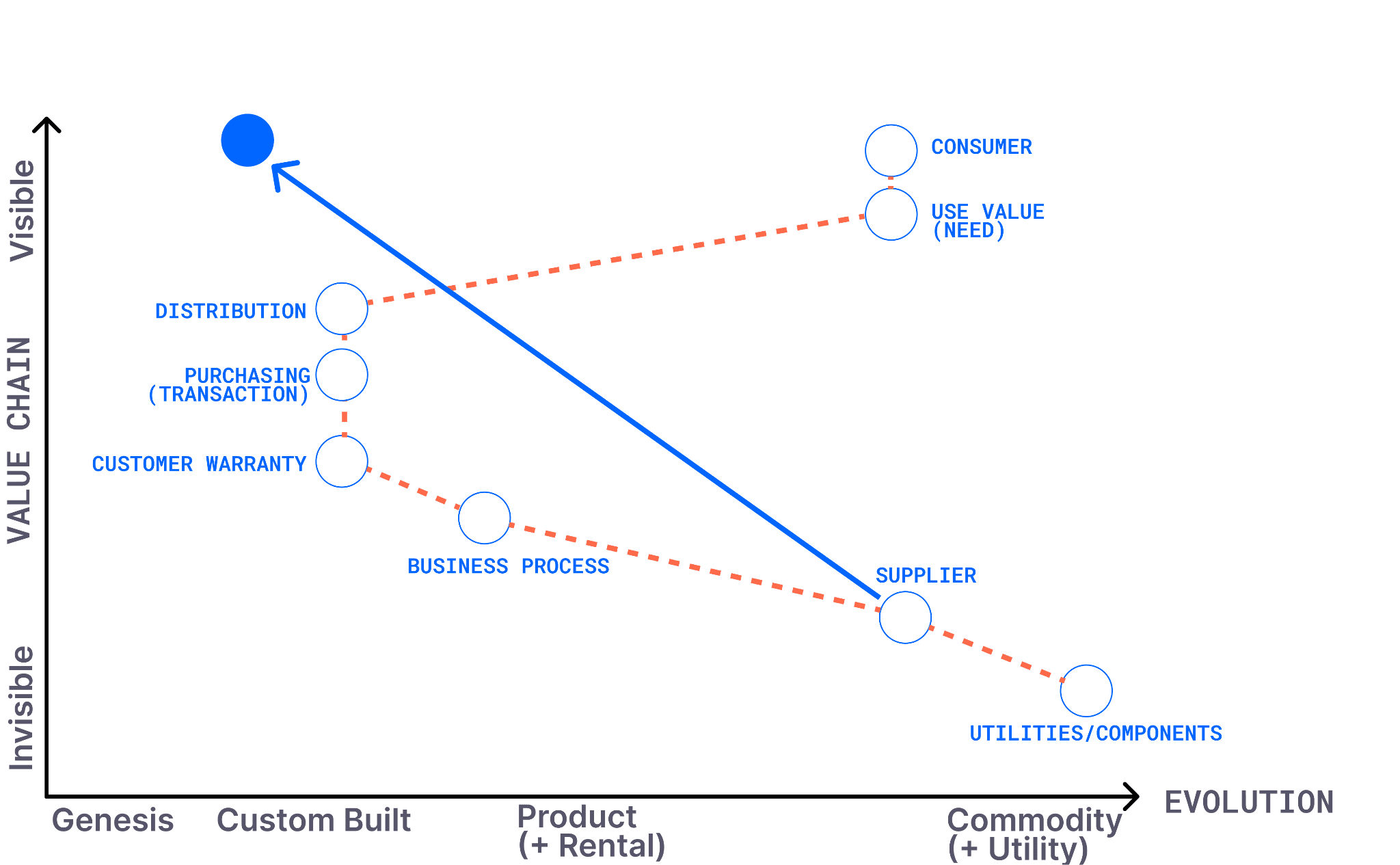
If there is a massive number of producers in this value chain, gaining more potential to create value (for example by means of a technological advancement), and if they are "independent" but, at the moment, hidden by an industrial player (typically as suppliers) or by a frequent mediator (as contractors), they can be brought on top of the value chain and treated as "users" that must be targeted with excellent experiences and the capability to specialize in their niche capabilities.
Guiding questions: Are producers in this value chain being masked by the industrial players? Are producers being mediated by marginally value-adding players? Are producers gaining capabilities through technology or other forms of access? How can we bring producers on top of the value chain? How can we "unbundle" producers from incumbent industrial players and make them "independent"?
PP3 - Standardization of transactions
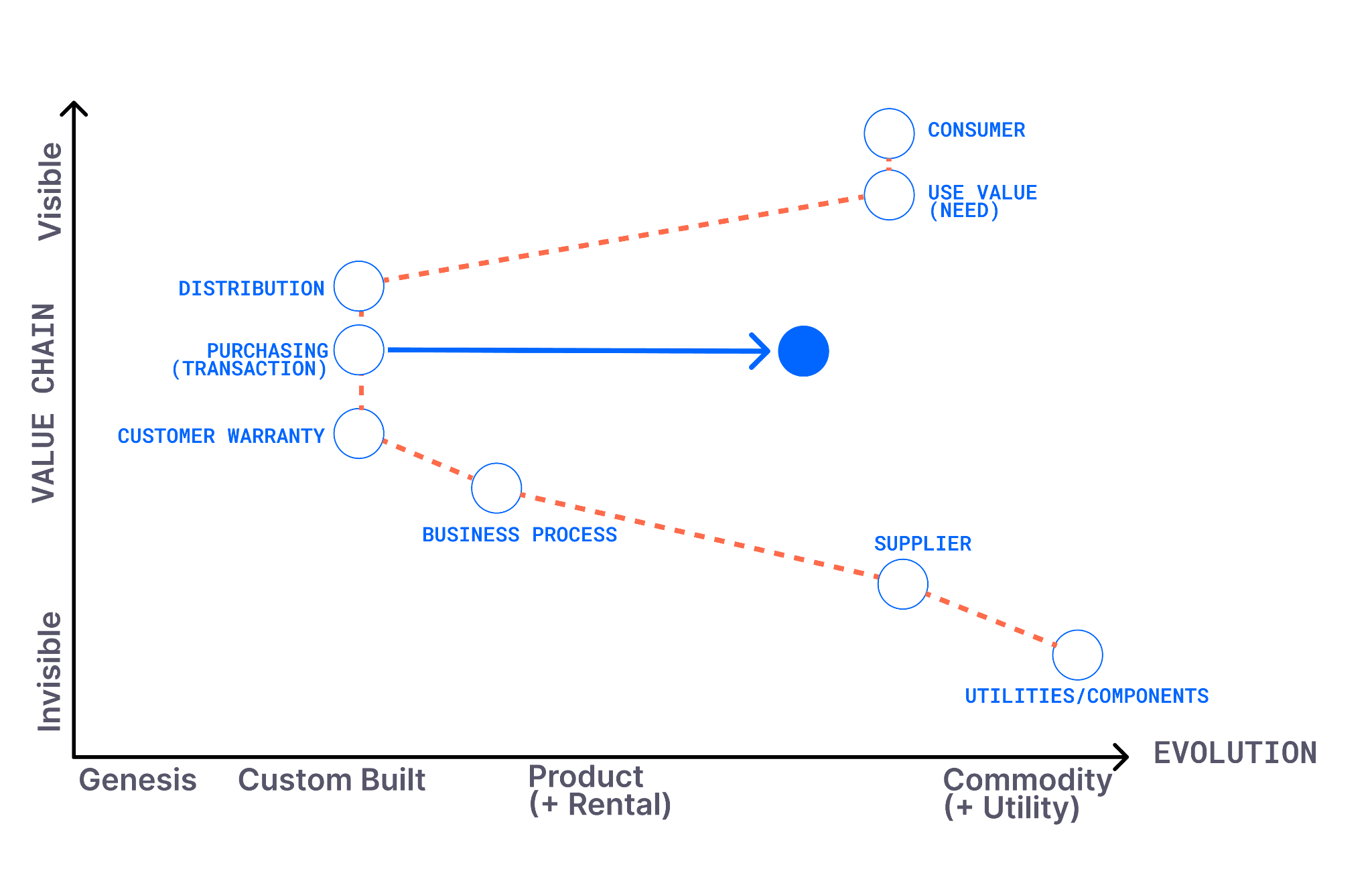
To ensure that producers and consumers can interact at scale, the platform shaper needs to ensure that all the phases of the peer-to-peer transactions (e.g.: selection, handshaking, requirements sharing, booking, purchasing...), and all the ancillary activities, are as standardized as possible. On top of standardized transactions, users can achieve fine-grained customizing, thanks to direct connection, increased information sharing, and more.
Guiding questions: What would a standardized transaction look like in the context I'm shaping? How can we leave enough space for informal adaptation to the participants so that they can work with a standardized transaction?
PP4 - Complex business process embedded into Software as a Service
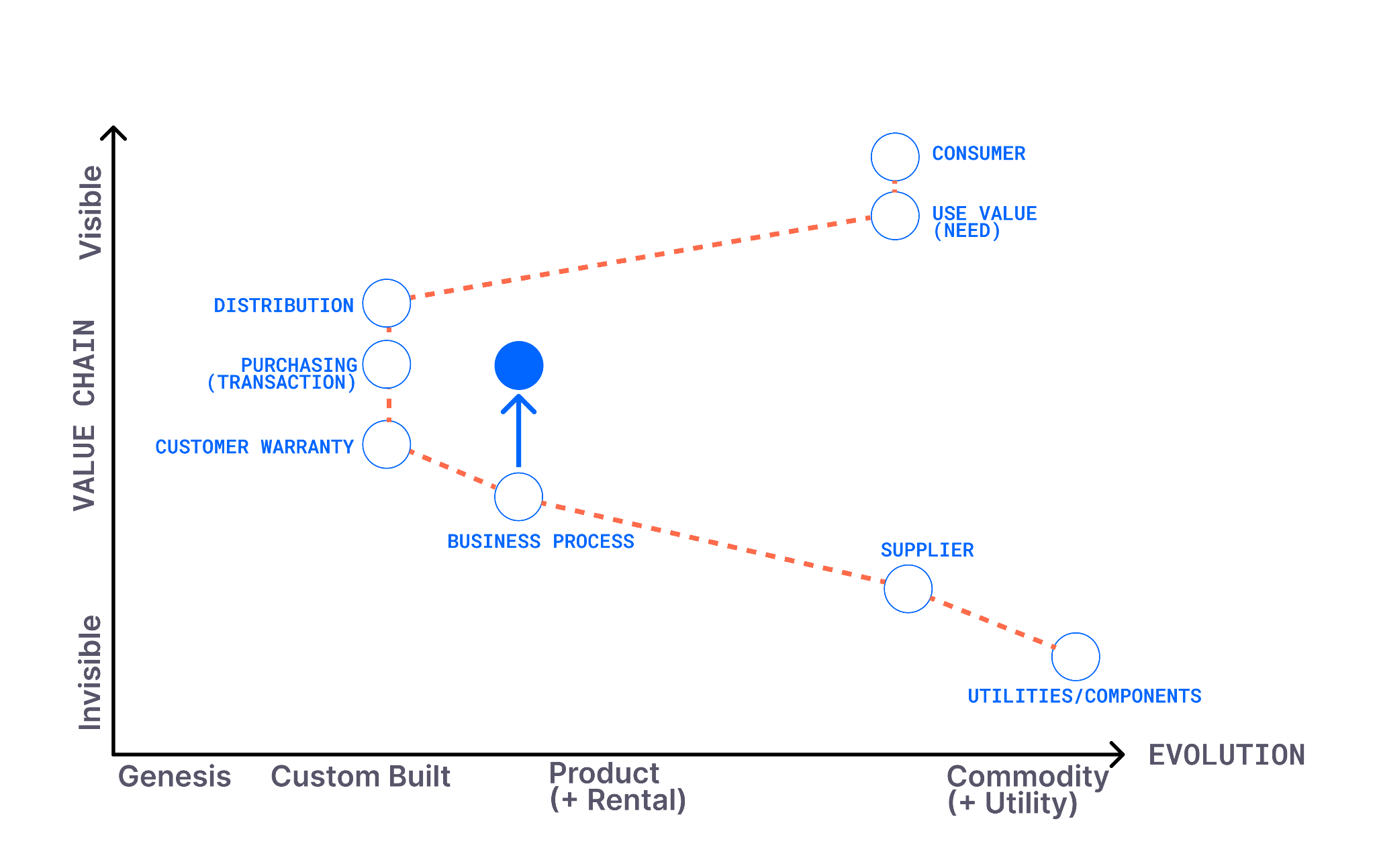
Taking complex and formal elements of a pre-existing complex business process and making them more accessible (in terms of cost, distribution, etc.) by codifying them into a "Software as a Service" (SaaS) solution. This essential play couples with PP3 when contributing to reducing the costs associated with value transactions and is also key in keeping the rules crystal clear (and well known in advance) to all the entities and roles willing to leverage their potential through the platform. Having a SaaS to manage the business process allows users to self-serve, reducing the need for organizational staff and helping the growth and scalability of the platform strategy itself.
Guiding questions: What elements of this business process can be provided in a software as a service to be made available? What niches would access to a SaaS solution enable in this context?
PP5 - Enable leveraging on identity, reputation, and trust
The creation of a system that allows participants to have a confirmed identity, and accumulate reputation (and therefore social capital, trust) ensures that new entrants and smaller players are rapidly able to capitalize on performance and social status. Improving reputation and trust in the system in turn influences the quality of the exchanges in the ecosystem without the need for centralized vetting and control, further reducing the bureaucratic footprint.
Guiding questions: How can we facilitate the best to emerge? What elements of reputation should we harvest in the subject value chain?
PP6 - Aggregation of demand (and supply)
By aggregating demand (and sometimes supply), platform strategies also overcome the traditional (push) "sales" perspective and move into "pull". Network effects drive great attraction to a growing context of interaction and it is therefore often crucial to aggregate demand so as to generate a pull effect on the supply (or vice-versa), in turn generating more demand attraction. This mechanism is crucial to first start and then keep on feeding the network effects. This is how platforms grow.
Guiding questions: How can I control demand and aggregate it as an input channel for this strategy? What elements do I control in order to generate a demand aggregation?
By applying these Platform Plays together (or at least those that are more relevant and have the greatest impact on the current ecosystem), platforms can re-shape the value streams and help leverage unexpressed potential. An overview of the effects of the six plays:
What the plays leave you controlling
As a result, typically, platform-marketplaces (especially the most archetypal aggregators, the "horizontal" ones) evolve to have a Z-shaped value chain:
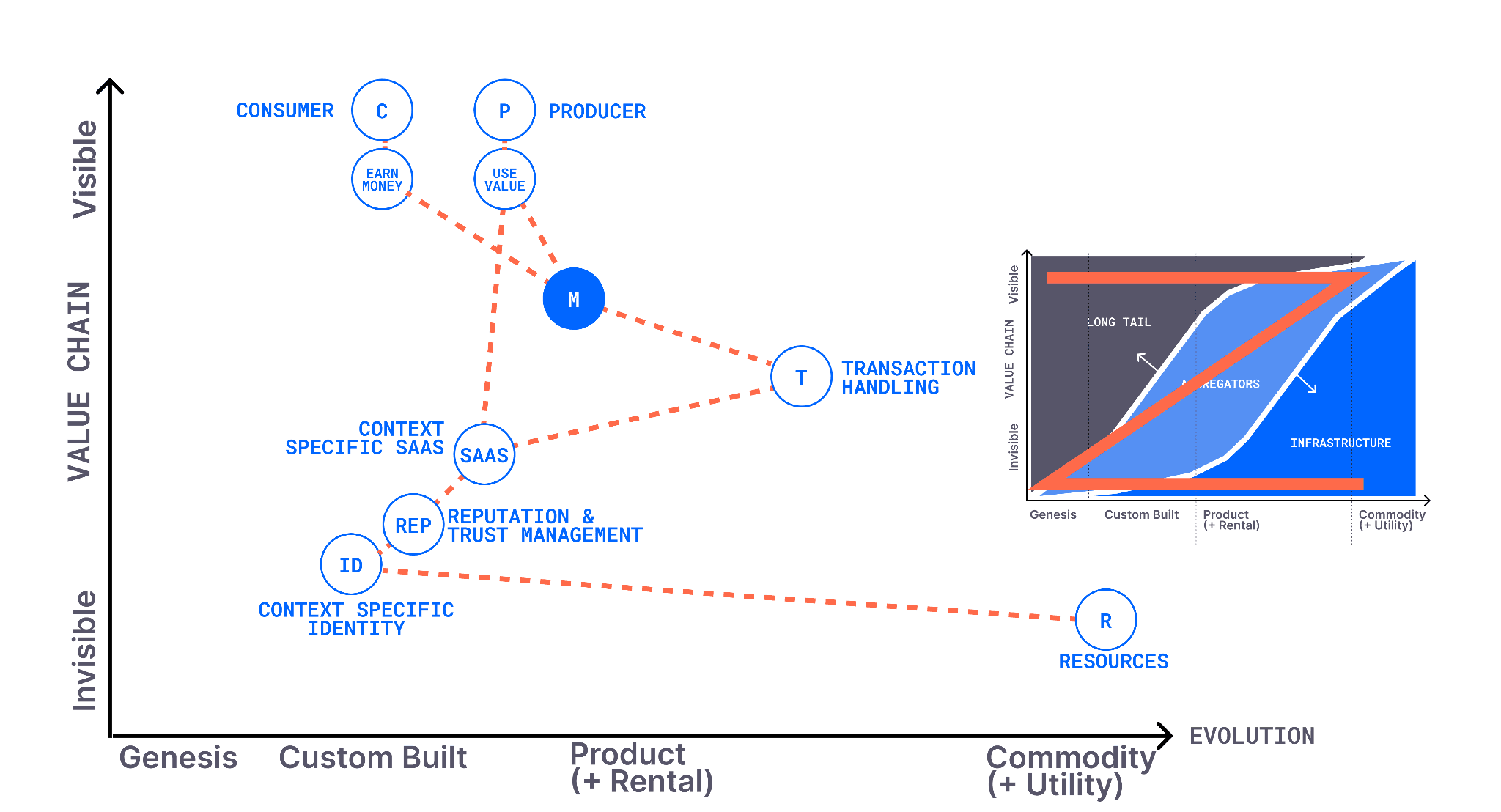
From a strategic standpoint, the application of these key value chain transformations normally leaves the aggregator controlling essential elements of the value chain: the marketplace (M); the transaction handling (T); the SaaS (and more generally the "product" side of the platform strategy); the reputation and the identity of the participants (ID+Rep). All of these elements make the aggregator's strategy more defensible: as an example, all reputation created on the platform is essentially tied to the platform and normally not portable to other platforms.
Examples: how notorious platforms apply the six plays
| Platform Play | Platform | How |
|---|---|---|
| PP1. Personalization of experience | Etsy | Buyers get in direct touch with creators, enabling personalization far beyond pop-up markets or distribution shops. |
| PP2. Producers on top of the value chain | Airbnb | Great hosts build a professional opportunity - grow, manage multiple listings, manage others' listings; designed with hosts primarily in mind. |
| PP3. Standardization of transactions | Airbnb | Standardized the booking transaction where it used to be case-specific, fragmented, inconsistent, and fraud-prone. |
| PP4. Complex process into SaaS | Honeybook | Full-featured event management designed for the profession - collapsing formerly separate offerings into one place. |
| PP5. Identity, reputation, trust | Thumbtack | Pros leverage their reputation - hires, years in business, reviews. |
| PP6. Aggregation of demand (and supply) | Outdoorsy / Yescapa | RV and camper renters connect freely, unlocking massive - often idling - inventories. |
How to use it
The plays are applied visually on the Wardley Map: they encode the C-to-Z transition, from the C-shaped industrial value chain to the Z-shaped aggregated one.
Steps
- Map the as-is — Draw the current (C-shaped) value chain on the Wardley Map - solutions serving massified needs through controlled distribution.
- Test each play — Walk PP1-PP6 with their guiding questions against the mapped chain: which plays are available, with what variants?
- Envision the to-be — Sketch how the applicable plays transform the chain into the target Z-shaped platform value chain.
- Identify what you'd control — Mark which defensible elements the transformation leaves you controlling: marketplace, transactions, SaaS, identity+reputation.
Tips
- The plays are a library, not a checklist: pick the ones relevant to the specific gameplay.
- Applying the plays also yields insights on enabling and empowering services and channel optimization - capture them for the design phase.
Connections with other canvases
Feeds into
- Brief Consolidation Canvas — The identified plays and gameplay are consolidated in the exploration brief
Informed by
- Wardley Map Canvas — The plays are executed visually on the mapped value chain
- Arena Scan Canvas — The arena decomposition frames which value chain the plays apply to
Complements
- Pattern Cards — Patterns spot the opportunity signals; the plays execute the value-chain transformation
Used in techniques
- Articulating the Platform Value Proposition
- Framing the Platform Strategy Model
- Scanning and Mapping the Ecosystem
Used in pipelines
Resources
- Guide reference: PDT Opportunity Exploration Guide - The Six Recurring Platform Plays and the C-Z Transition
- License: Creative Commons Attribution - Share Alike 4.0 International
- Version: 2.2
Catalog · Part of Platform Design Toolkit · v2.2