Bringing the Platform to Market
Define the target market type and size, then progressively achieve scale and liquidity around one or more high-value relationships
The macro-problem: Moving forward after a first platform idea has been evaluated and tested (possibly with an MVP), this consists of figuring out how to define the target market type and size, progressively trying to achieve scale around one or more high-value relationships between different entities.
Overview
This is the third macro-problem: Defining the Go-To-Market and Liquidity approach. In marketplaces, product and liquidity (thus go-to-market) are notoriously difficult to untangle — an illiquid marketplace will never be able to deliver the product promise.
Some of this work comes before Problem-Solution fit (the structure of the market and network pre-exist your strategy — they relate to the incumbent competition or the nature of the underlying relationships), and some comes after, when the challenge becomes tactical: choosing the tactics to launch in an initially constrained market and spilling liquidity over to other areas.
The macro-problems are circular. Understand the structure of your market and network at the earliest stages — even before MVP — because some characteristics pre-exist your strategy.
The key questions you need to answer
- What are the key characteristics of the marketplace I'm trying to scale?
- Should I go "vertical" or "horizontal"?
- What are the canonical units of liquidity (the contexts where progressive liquidity should be created)?
- What side should I focus on?
- What tactics should I use as I approach the launch (solving the chicken-and-egg problem)?
When you work on this
Partially before Problem-Solution fit (the market/network structure pre-exists), and crucially after MVP — the passage between Problem-Solution fit and Product-Market Fit. The horizontal-vs-vertical question and the canonical-unit structure should be addressed as early as possible: they tell you how to constrain the initial market for testing liquidity.
The flow
Three techniques compose this pipeline.
1 · Understand the Marketplace Type, Breadth, and Properties
Technique: Framing the Platform Strategy Model · Tools: dedicated heuristics
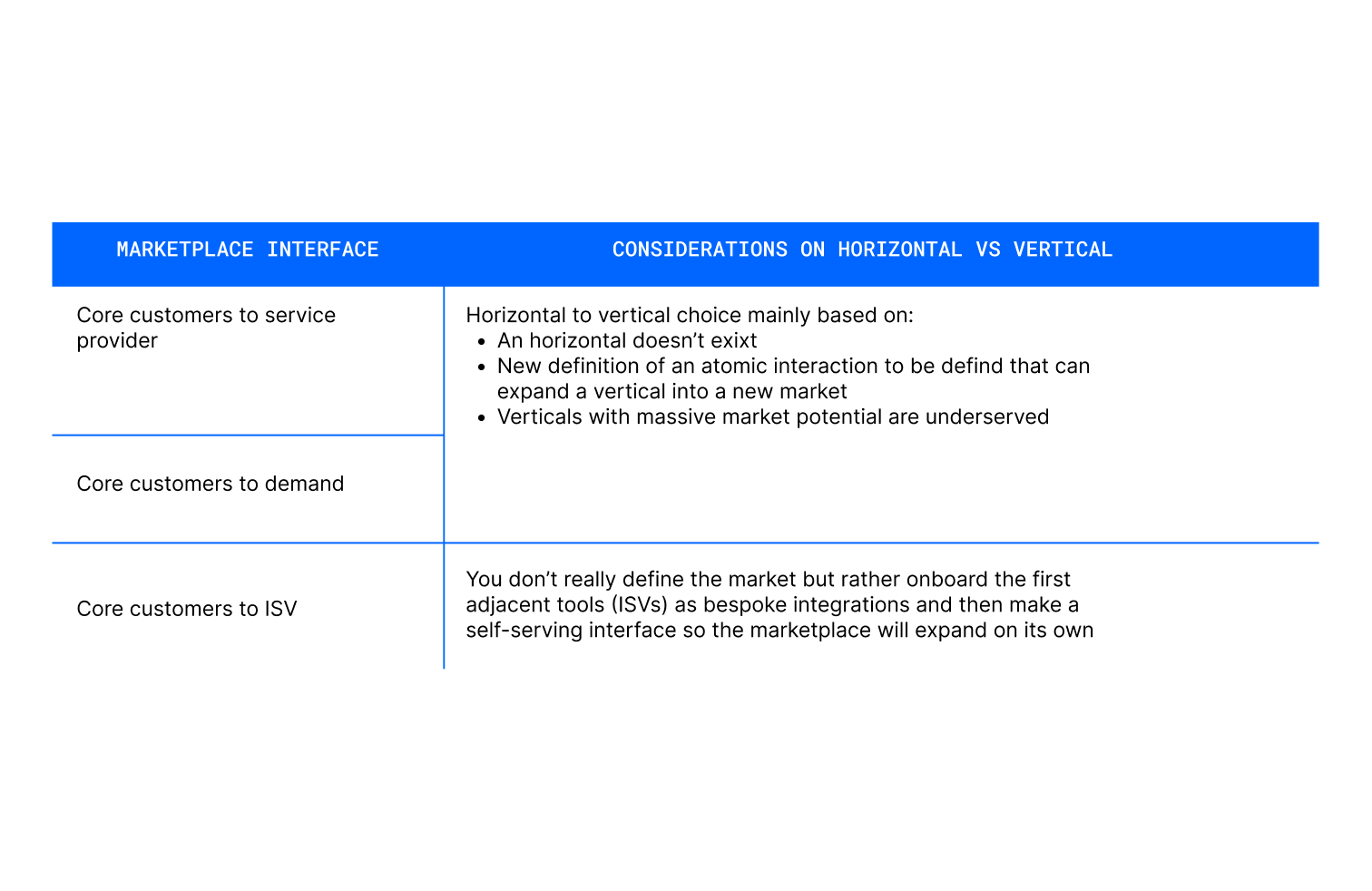
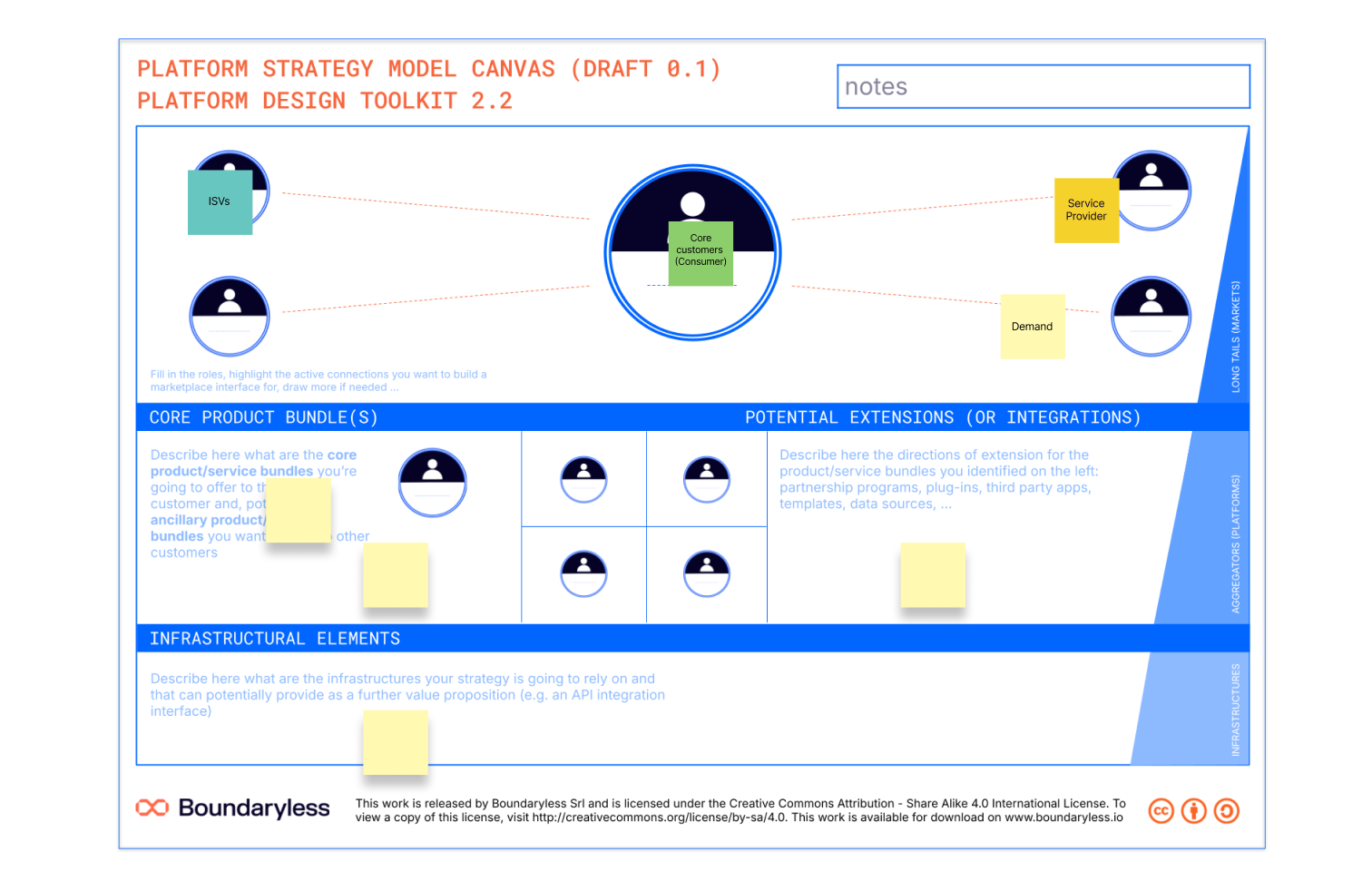
Start from your product value proposition: a core product bundle for your core customer, potentially reinforced by scalable relationships powered through a marketplace — the customer's relationship to their suppliers, to their demand, or to ISVs developing extensions. Not all need to be present (Shopify is the rare case with all three: the Shop app generates demand, the e-commerce stack is the core, apps extend it, the expert marketplace connects to suppliers).
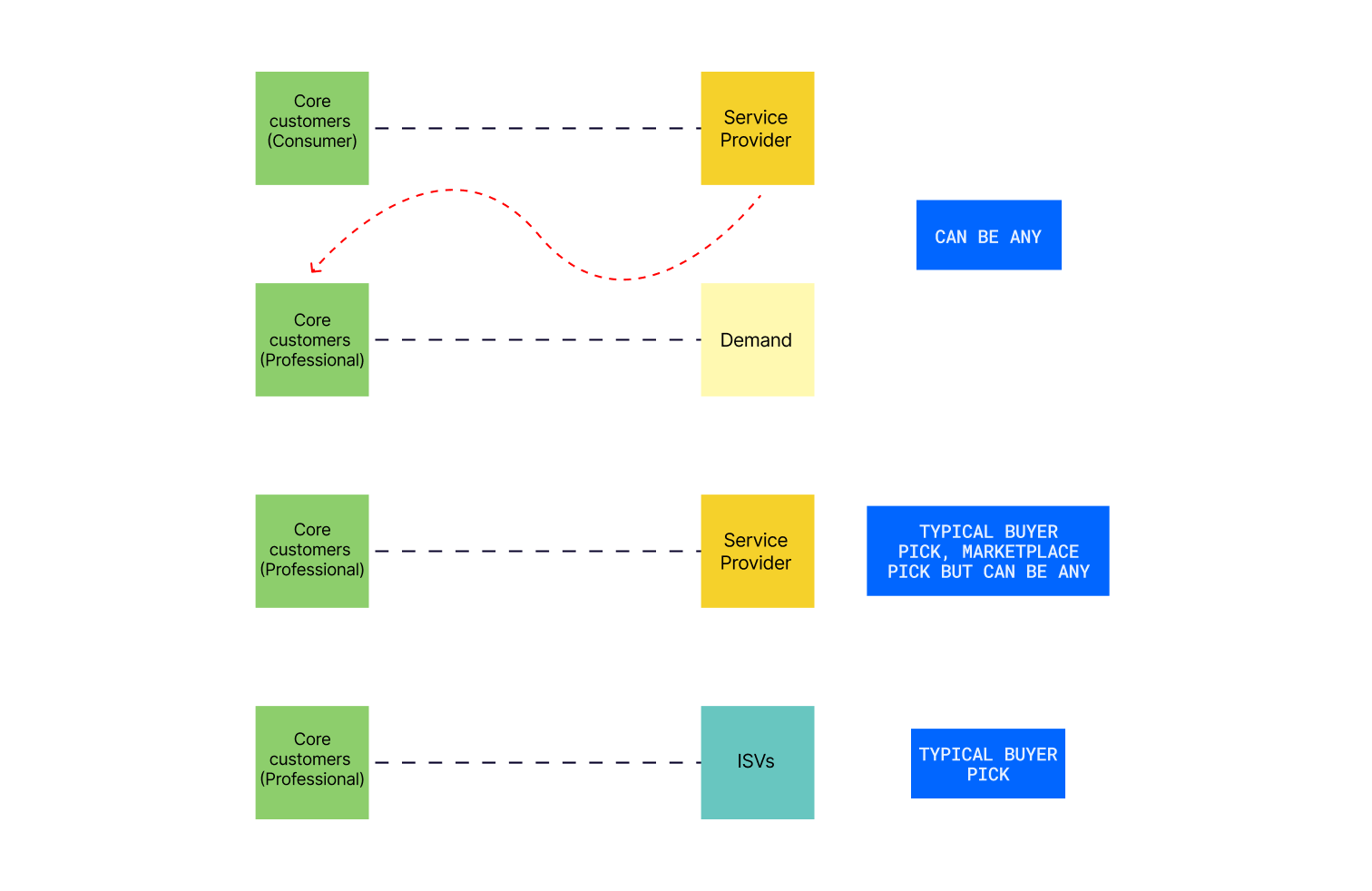
Each marketplace interface is its own network with its own characteristics. There are three major marketplace experience types (Josh Breinlinger):
- Marketplace Picks — the platform selects and endorses (curation, quality control)
- Buyer Picks — buyers choose from a wide range (variety and options)
- Double-Commit — both sides commit before the transaction (trust, lower failure risk)
Recurring patterns exist: an extension marketplace (ISVs → customer) is almost always a buyer pick — the platform doesn't "choose" what apps a customer uses.
Vertical or horizontal? Use Sarah Tavel's "white spaces" heuristics: redefine the atomic unit of supply to dramatically expand addressable supply (Airbnb adding rooms vs HomeAway's entire homes), offer a far superior experience solving trust issues (GOAT vs eBay authenticity), or look into vertical categories served with low NPS.
Implications & dependencies: executable at any time. A deeper understanding of the experience (from Designing the Platform Experience) helps with segmentation, but many market characteristics are intrinsic to the relationship.
2 · Understand How Liquidity Can Be Built
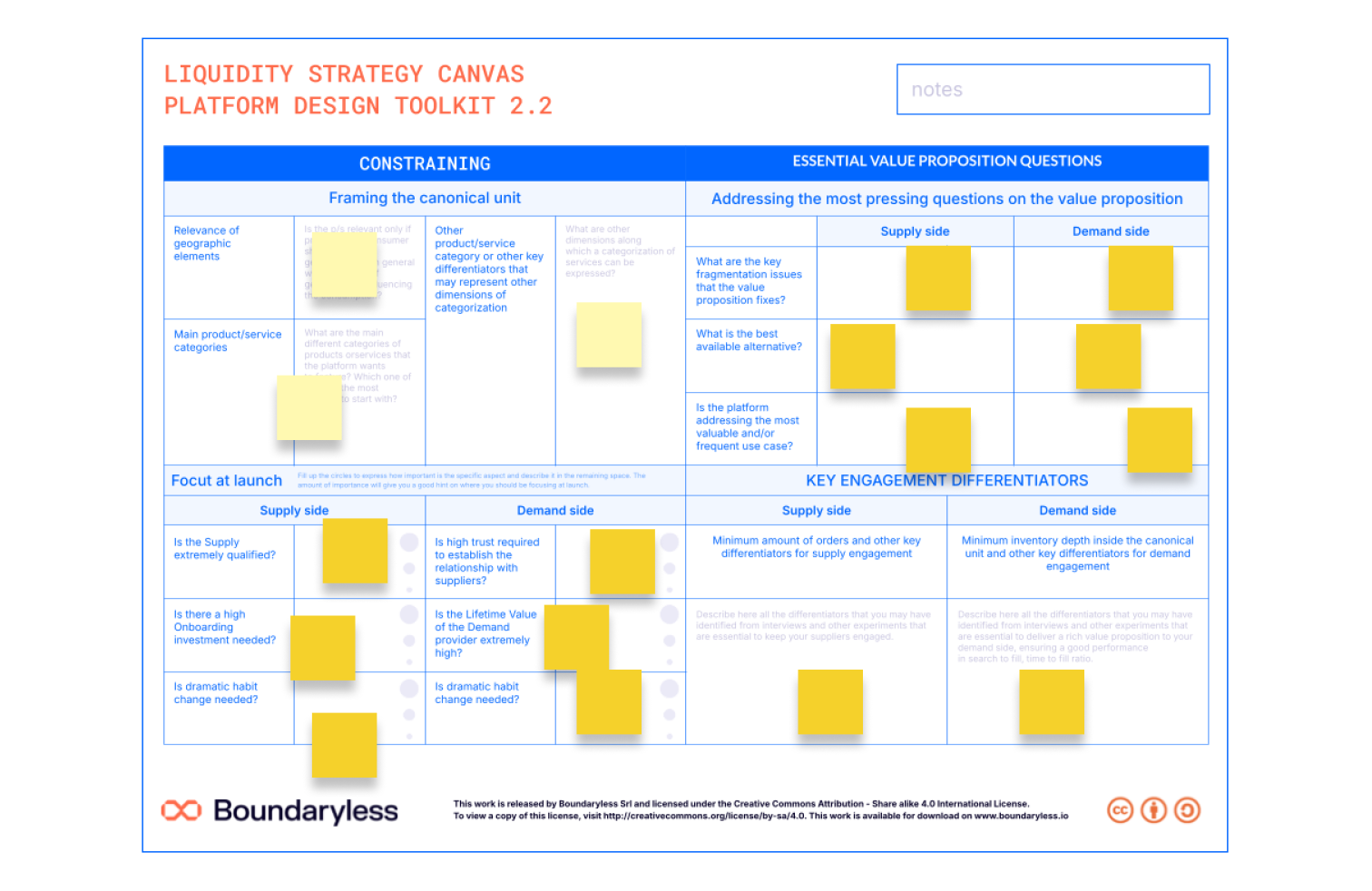
Technique: Building Marketplace Liquidity · Canvas: Liquidity Canvas
Marketplace liquidity = the ease with which participants can find and complete transactions. Strategically framing it has two steps:
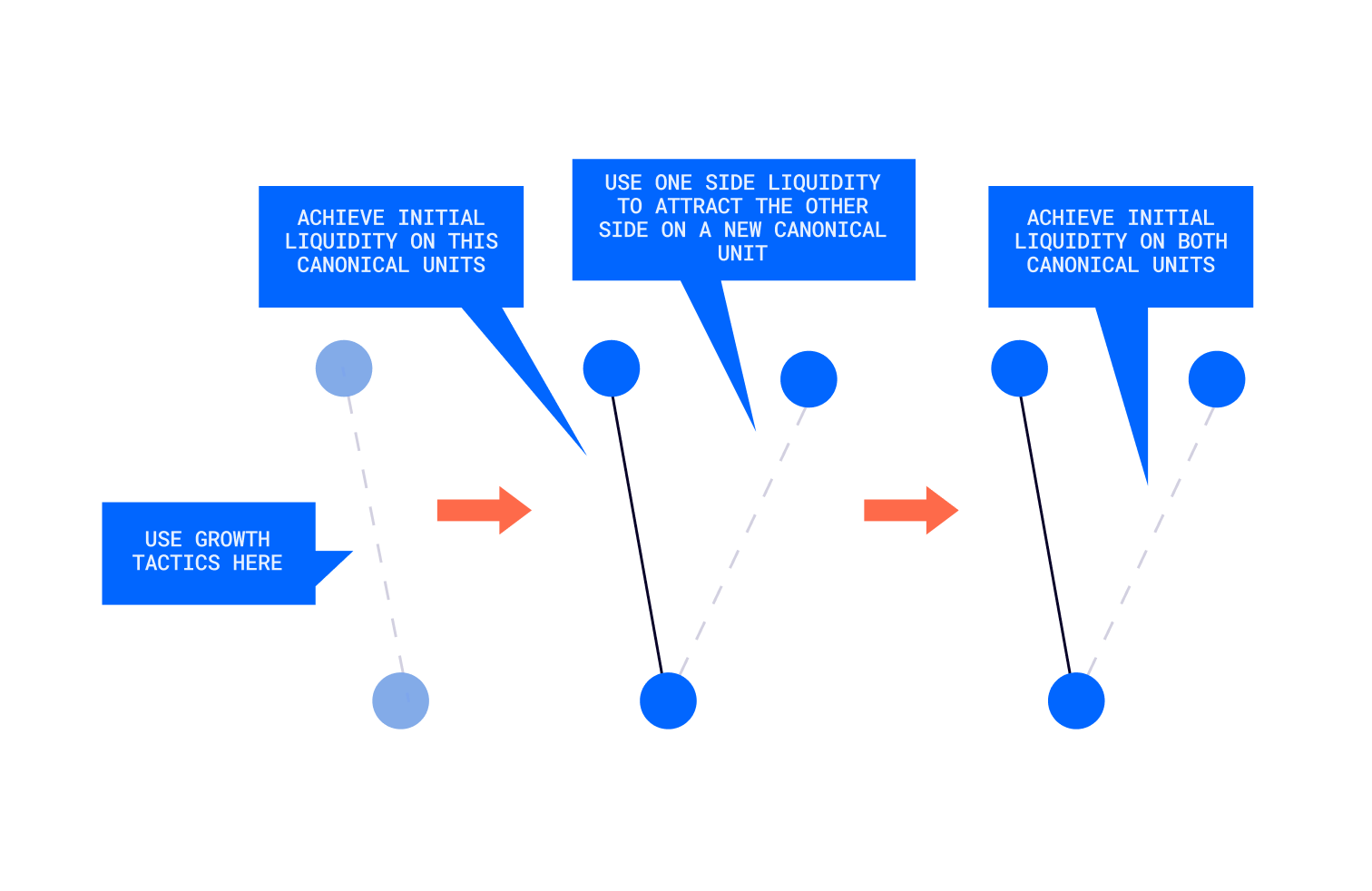
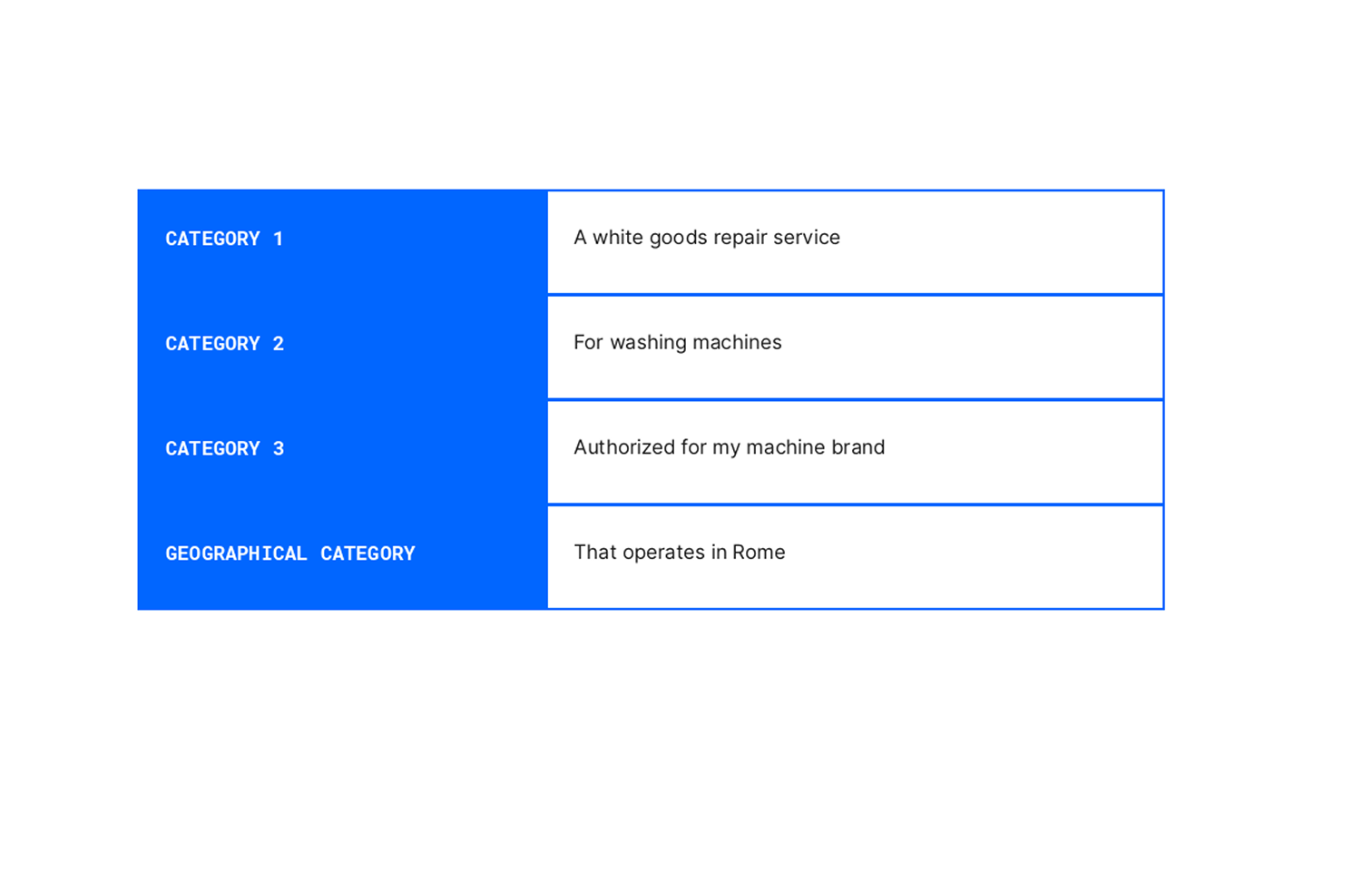
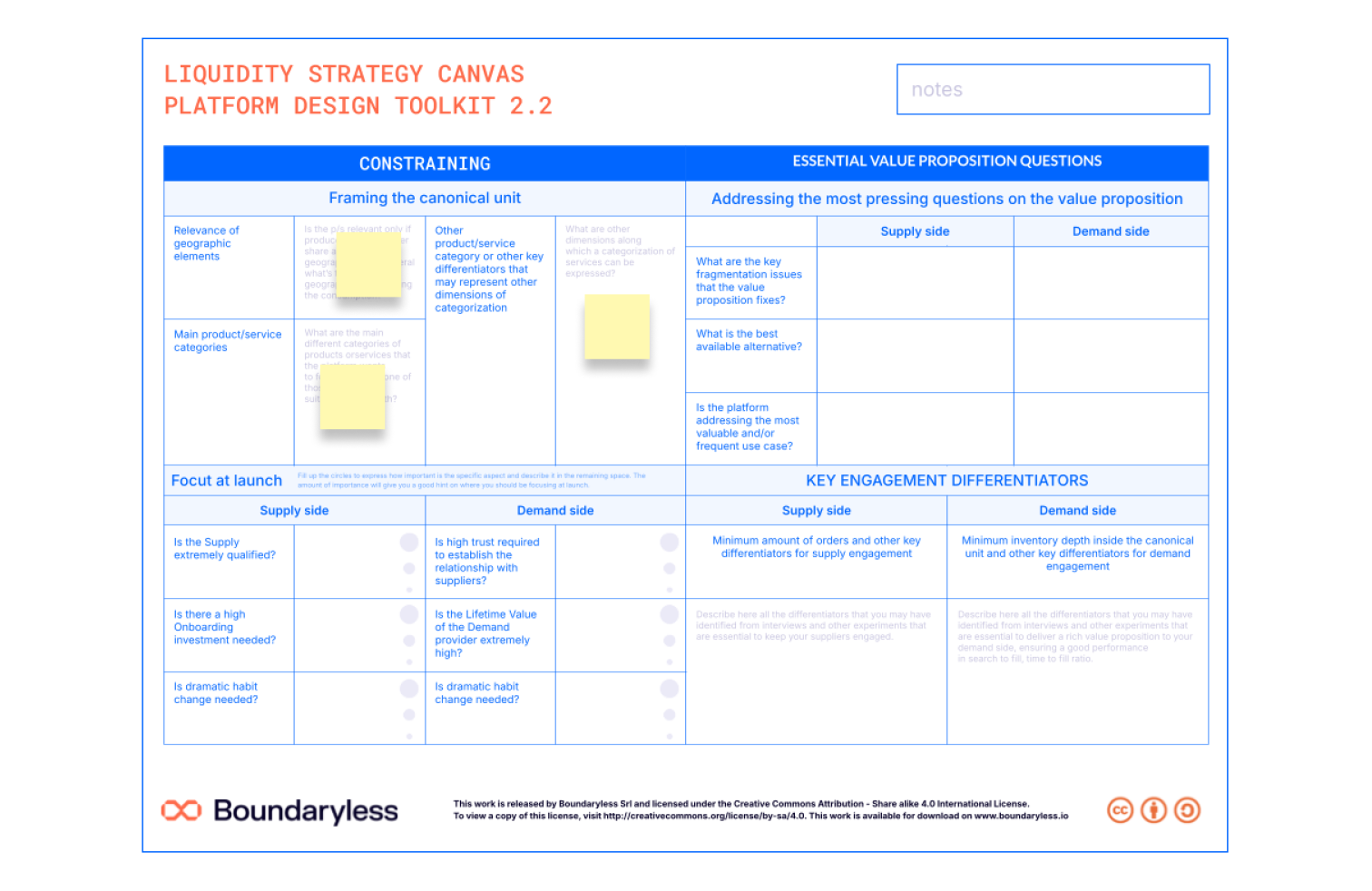
Understand your canonical unit. Constrain the market to a context where you can kick-start liquidity. Historically: geographies (a single city — Airbnb) or categories (books — Amazon). The canonical unit (Dan Hockenmaier) is the convergence of the different dimensions/categories in your market — usually a geographical element plus categorization layers. Example: a white-goods repair marketplace — if research shows operators serve all machine types and brands, the canonical unit is just geographical ("repair services in Rome"); if they specialize, you constrain further. The canonical unit also drives SEO ("a plumber in New York" → URL structure).
Understand both sides and where to focus. Check the relationship addresses the key drivers of value creation (solving fragmentation, beating alternatives, most valuable use cases). Assess blockers: supply shortage (expensive/rare qualifications, high onboarding investment, habit change) vs demand shortage (lack of trust, habit change). Most marketplaces are supply-constrained. Keep both engaged: supply needs a sustained flow of orders (Minimum Order Flow); demand needs depth/readiness of supply (Search-to-Fill, Time-to-Fill).


Implications & dependencies: requires Problem-Solution fit and an MVP ready to scale. Be prepared to track metrics — growth can pick up at any point.
3 · Choose Growth Tactics
Technique: Selecting Growth Tactics · Tools: Growth Tactics Cards + Cheat Sheet
Once you know how vertical/horizontal to go, the canonical unit to start with, and how both sides are framed, the remaining work is tactical: moving past critical mass, solving the chicken-and-egg problem for the specific canonical unit you're targeting.
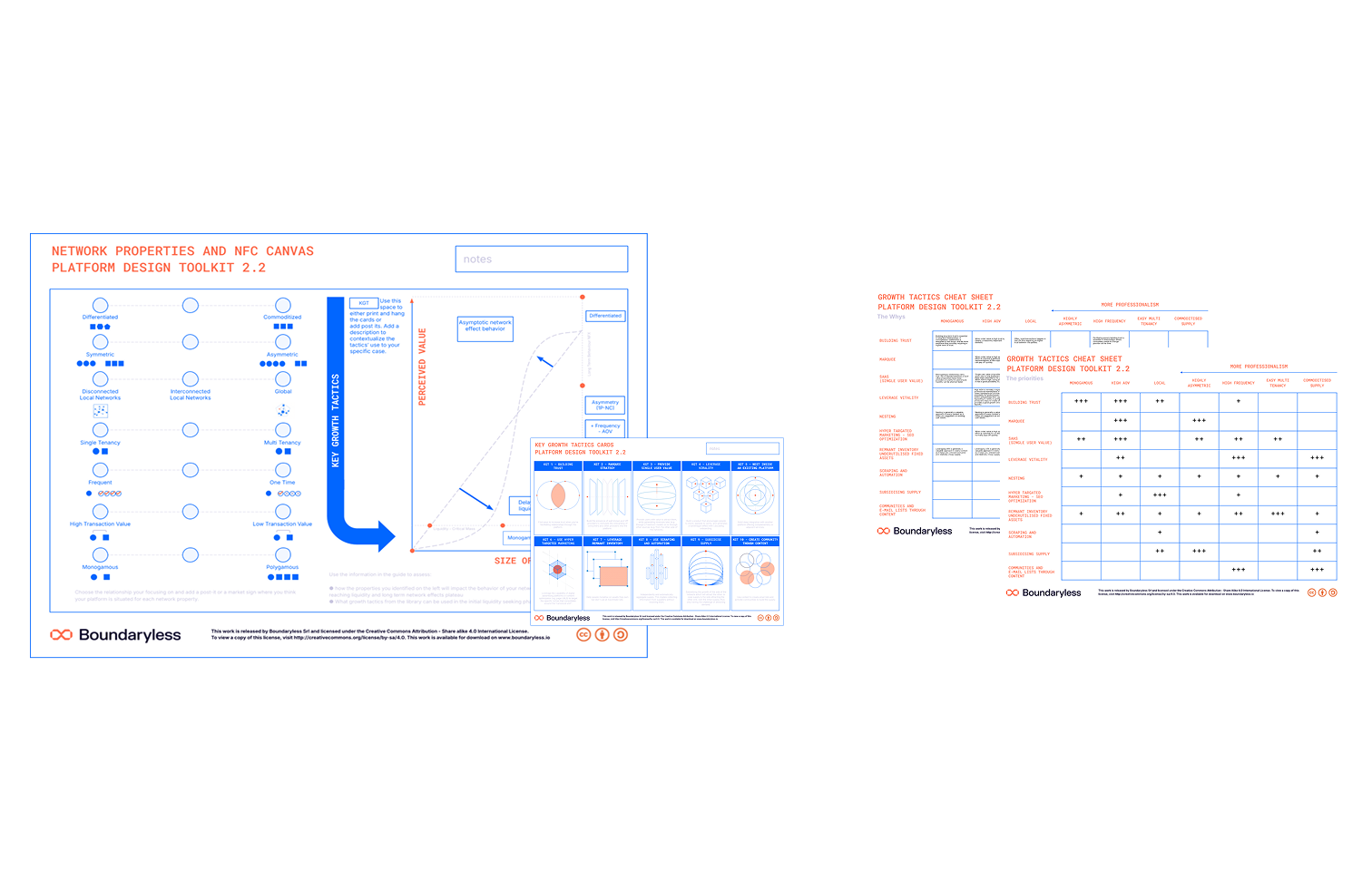
The Growth Guide provides 10 growth tactics and a cheat sheet that connects the tactics with the network properties of the relationship underlying the experience (the properties characterized in Designing Network Effects and Flywheels). Your objective is to achieve liquidity inside the canonical unit you're targeting at that time.
What comes next
Once tactics are in motion and liquidity starts building, the work becomes a continuous discipline of measurement and compounding — covered in Engineering Sustainable Growth. If you have multiple marketplace interfaces, you'll seek liquidity for each one separately (Airbnb launched experiences after room rentals, targeting the same customers for a head-start).
Source
This pipeline is the operational form of the Boundaryless essay "Defining the Go-To-Market and Liquidity approach" (Part 3 of The Macro-Problems and Techniques of Platform Design), combined with the PDT Growth & Product Guide. Full legacy narrative: Legacy PDT Growth.
Pipeline type: macro_problem · Status: active